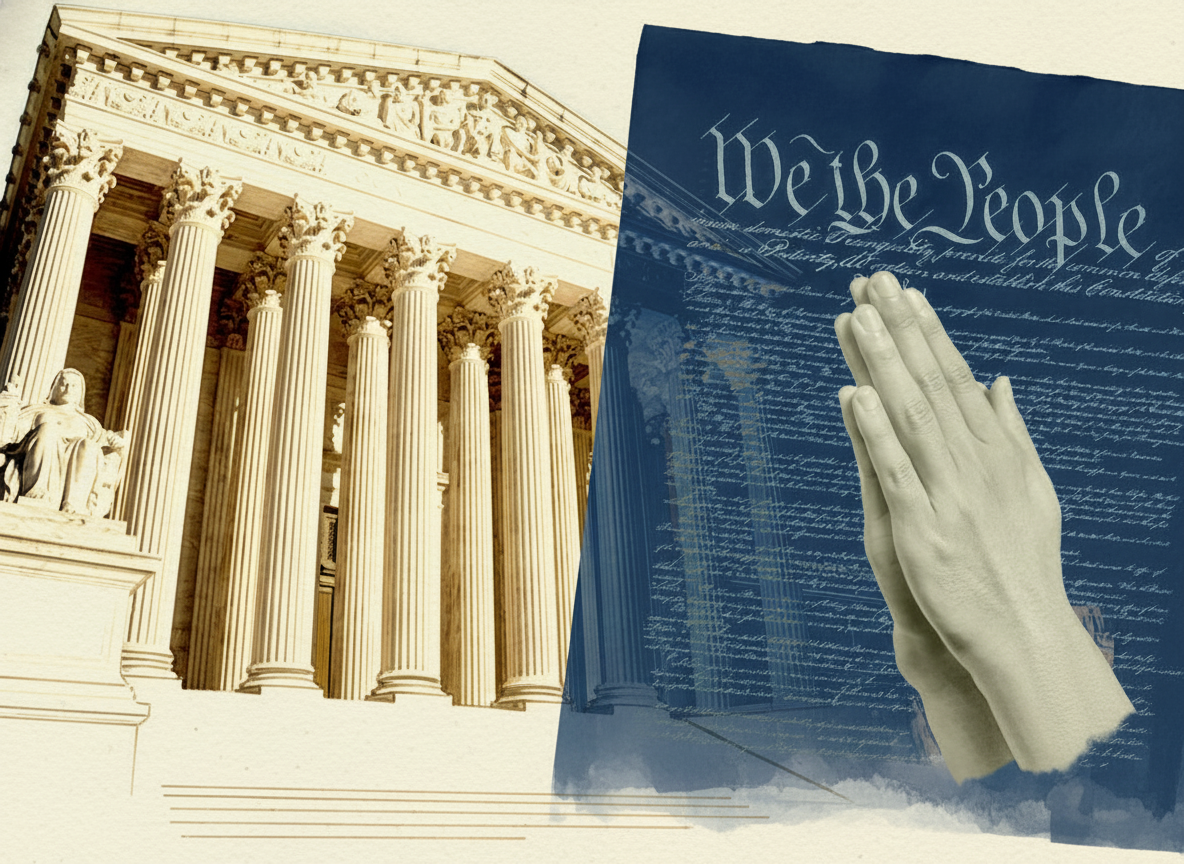
Supreme Court Upholds Family, Faith, and Freedom in 2025
The 2025 term of the United States Supreme Court has proven to be a turning point for American constitutional law. With decisions that affect everything from parental rights in public schools to the protection of religious nonprofits, the Court has consistently shown that the Constitution’s guarantees for family, faith, and freedom are not just lofty ideals—they are enforceable rights. As this pivotal period in legal history draws to a close, we take a closer look at the challenging issues, the twisted turns, and the significant victories that defined the year.
Throughout 2025, the Court faced cases loaded with issues that touched on sensitive aspects of everyday life. These decisions underscored the power of the Constitution to safeguard the freedom of conscience and to ensure that the role of parents and religious organizations remains respected in the face of government overreach. In this editorial, we examine key rulings, their impact on public policy, and what these decisions mean for American society in the coming years.
Key Supreme Court Decision on Parental Rights in Public Schools
One of the standout cases of 2025 was Mahmoud v. Taylor, a case that directly tackled the tricky parts of parental rights in the public education system. The decision affirmed that parents have a constitutional right to guide the religious upbringing of their children, even when their children are enrolled in public schools. In a 6-3 ruling, Justice Samuel Alito delivered a pointed critique of public school officials in Montgomery County, Maryland, who had introduced LGBTQ-themed storybooks without consulting parents or providing a way for parents to opt out.
Justice Alito argued that these books were presented in such a way as to celebrate some values while rejecting others—explicitly, the values and beliefs held by many religious communities regarding sexuality, marriage, and gender. The Court’s majority was firm in its conclusion that the school board’s actions interfered significantly with the children’s religious development. It also reinforced the idea that the right to direct one’s child’s religious formation must extend into the public school classroom.
Supporting Religious Traditions in a Pluralistic Society
The Mahmoud decision highlights the essential role that religious traditions play in many families’ lives, even in a diverse and pluralistic society. The judgment protects parents who face limited school choices due to financial constraints by ensuring that their children’s religious and moral upbringing remains under the family’s control. This is not just a legal decision but a broader societal affirmation that the state cannot easily override the deep-seated values parents seek to transmit.
Justice Clarence Thomas, in his concurring opinion, warned against letting “conformity-driven rationales” override constitutional freedoms. His remarks serve as a reminder that even initiatives aiming to promote equity and inclusion must be carefully balanced against the fundamental rights of individuals to pass on their core beliefs to the next generation.
Religious Schools and Charter Programs: Protecting Faith-Based Institutions
An equally important yet unresolved issue was the case of St. Isidore of Seville Virtual School v. Drummond. Here, a 4-4 deadlock following Justice Amy Coney Barrett’s recusal left a significant question unanswered: Should religious charter schools be excluded from charters simply because of their religious affiliation? In this case, Oklahoma’s attorney general successfully blocked a Catholic charter school from operating, despite the school board’s support.
This decision exposed the tangled issues surrounding the inclusion of religious institutions in publicly subsidized education programs. The Court’s split decision has not set a binding precedent, but it sends a clear signal that several justices—namely Thomas, Alito, Gorsuch, and Kavanaugh—believe that excluding religious schools on the basis of their religious character is a form of discrimination.
Court’s Stance on Religious Discrimination in Education
These originalist justices argue that charter schools are private entities created and managed by individuals and organizations, not government entities acting on behalf of the state. This distinction is crucial because once a state decides to subsidize private education, it cannot disqualify certain schools purely because they are religious in nature. The decision in Espinoza v. Montana Department of Revenue, and its cousin case Carson v. Makin, set the stage for a future ruling that may finally resolve the contentious issues around religious discrimination in the realm of charter education.
Looking forward, another case is expected to reach the Court on this subject. When it does, advocates for religious freedom hope that the constitutional principle allowing the state to fund private education without discrimination will be firmly reasserted.
Challenging Regulations: Conversion Therapy and Freedom of Speech
October saw a landmark case that tested the limits of free speech in the context of controversial counseling practices. In Chiles v. Salazar, the justices examined Colorado’s ban on “conversion therapy”—a regulation that prohibits licensed counselors from offering talk therapy intended to align children’s sexual or gender identities with their religious convictions. Kaley Chiles, a Christian counselor, challenged the statute on the grounds that it effectively curbs her First Amendment right to speak freely with her clients.
Free Speech and the Right to Religious Expression
The oral arguments in Chiles v. Salazar revealed that many justices are poised to apply strict scrutiny to the law, emphasizing the profound impact it has on free speech. Justice Neil Gorsuch critiqued the law as “pretty self-executing,” while Justice Barrett questioned whether Colorado had presented sufficient evidence of harm from the therapy. The law’s asymmetry—allowing non-parental approval for gender-affirming counseling while restricting counseling aimed at aligning with biological sex—is a stark example of uneven regulation that many believe does more harm than good.
Proponents of religious freedom argue that a ruling in favor of Chiles would underscore the fundamental constitutional protection against compelled speech. For many counselors and families, having the freedom to offer and seek advice that is consistent with their faith and conscience is more than a legal matter—it is about preserving a way of life that is inextricably tied to their identity.
Government Lawfare and the Protection of Religious Nonprofits
Equally significant is the case of First Choice Women’s Resource Centers v. Platkin. This case pits a religious nonprofit against aggressive government lawfare. New Jersey Attorney General Matthew Platkin, known for his pro-abortion stances and previous collaborations with Planned Parenthood, initiated a sweeping subpoena demanding a decade’s worth of records from a network of Christian pregnancy centers. The subpoena sought not only documents but also the names and addresses of nearly 5,000 donors.
Safeguarding Donor Privacy and Advocacy Freedom
The implications of this case extend far beyond a single organization. In a bold coalition that includes the ACLU, the U.S. Chamber of Commerce, 19 states, and other advocacy groups, there is a growing consensus that such investigative tactics threaten the privacy of donors and the freedom of organizations to express their beliefs without fear of government reprisal. The legal argument centers on preventing the state from weaponizing its investigatory powers to target groups based on their political or religious perspectives.
This case echoes previous decisions, such as Americans for Prosperity Foundation v. Bonta, in which Chief Justice John Roberts cautioned against the collection of sensitive donor information. The outcome of First Choice Women’s Resource Centers v. Platkin is set to be a key test of whether religious nonprofits can continue to operate without fear of undue government intrusion.
The Broader Impact: Family and Faith in the American Public Sphere
Beyond these individual cases, the Court’s decisions throughout 2025 have far-reaching implications for American society. They reaffirm that certain most personal decisions—ranging from the religious upbringing of children to the freedom of individuals and organizations to speak their truths—are shielded from government interference.
For families wishing to pass on their faith traditions without intrusion, for religious institutions seeking to serve their communities free from discriminatory regulations, and for counselors and nonprofits engaged in work aligned with their conscience, the year’s rulings provide a meaningful layer of protection. The decisions reach into the private and public realms, ensuring that both avenues remain open for the practice of faith and the nurturing of family values.
List of Key Rulings and Their Impact
- Mahmoud v. Taylor: Reaffirmed the constitutional right of parents to direct their children’s religious upbringing, even in public school settings.
- St. Isidore of Seville Virtual School v. Drummond: Highlighted the potential for religious discrimination in charter school programs, setting the stage for future Court action.
- Chiles v. Salazar: Tested the boundaries of free speech in the context of controversial conversion therapy regulations, with implications for religious and political expression.
- First Choice Women’s Resource Centers v. Platkin: Examined the use of government subpoenas as a tool of lawfare against religious nonprofits, emphasizing donor privacy and advocacy freedom.
Why These Decisions Matter: The Interplay of Law and Daily Life
The decisions handed down by the Supreme Court in 2025 are not isolated legal opinions—they are a vital part of the conversation about how constitutional protections play out in the real world. They remind us that while the legislative and executive branches have broad powers, the judiciary remains a check on those powers, ensuring that the rights enshrined in the Constitution are not overshadowed by shifting political winds.
For many Americans, these cases provide reassurance that their most personal decisions—those regarding faith, family, and the upbringing of their children—are protected. They also serve as a warning to governments at all levels: When it comes to matters of religious freedom and family rights, there are limits to how far state power can reach.
Breaking Down the Impact in Everyday Terms
| Key Issue | Impact on Daily Life | Future Considerations |
|---|---|---|
| Parental Rights in Schools | Ensures parents have a say in the moral and religious education of their children. | May prompt school districts to re-evaluate curriculum inclusion policies. |
| Religious Charter Schools | Prevents religious schools from being excluded based solely on their faith-based nature. | Could lead to more inclusive approaches in state funding for education. |
| Freedom of Speech in Counseling | Protects counselors who provide guidance aligned with their religious beliefs. | May influence how states regulate counseling practices and therapy methods. |
| Government Lawfare Against Nonprofits | Safeguards donor privacy and the freedom of religious organizations to engage in advocacy. | Establishes boundaries for how government agencies can pursue investigations. |
Understanding the Court’s Philosophy: Originalism in Action
The legal reasoning employed in these cases often harkens back to an originalist interpretation of the Constitution. This approach, favored by justices such as Thomas, Alito, Gorsuch, and Kavanaugh, argues that the meaning of the Constitution’s text should remain consistent with its original public understanding. This perspective is particularly evident in cases dealing with the rights of parents and religious organizations.
For supporters of originalism, these decisions are a reaffirmation that the Constitution’s promises were never intended to erode with time or political changes. Instead, they serve as a reminder that the rules of government and society should respect the deep-seated beliefs held by many Americans about the importance of family and religious tradition.
Digging Into the Fine Points of Originalist Reasoning
It is important to recognize that while the originalist view may seem rigid to some, its adherence to the text of the Constitution ensures that any attempt to alter the balance of power is met with strict scrutiny. Here are some subtle details of this approach:
- Textual Interpretation: Originalists rely heavily on the language of the Constitution as it was originally understood, which provides a stable framework for analyzing contemporary issues.
- Historical Context: Decisions are often buttressed with historical evidence, drawing parallels between past governance and modern challenges.
- Consistent Application: By sticking closely to the original meanings, the Court seeks to ensure that its decisions are not swayed by current political trends or shifting cultural values.
Looking Ahead: The Road to 2026 and Beyond
As the legal landscape evolves, the decisions of 2025 set the stage for further challenges and debates in 2026 and the years that follow. While the Supreme Court has delivered several key victories for family, faith, and freedom, there is still much to be resolved. With pending cases that will undoubtedly test the boundaries of these freedoms further, the dialogue between law, society, and personal belief remains dynamic and ongoing.
The coming period is expected to bring more cases that will force both the courts and policymakers to grapple with the twisted issues of religious expression, individual liberties, and state regulation. Whether it concerns the curriculum in public schools, the status of charter school funding, or the regulatory frameworks for counseling and nonprofit activities, the intricate interplay between law and daily life is set to become even more pronounced.
Future Challenges and Opportunities
Looking ahead, several upcoming cases are likely to impact religious freedom and related rights:
- Clarifying the Scope of Parental Rights: Future legal battles may revisit the parameters set by Mahmoud v. Taylor, ensuring that parental authority remains intact even as public education evolves.
- Defining the Boundaries of Government Oversight: With decisions like First Choice Women’s Resource Centers v. Platkin, there is an ongoing debate about how far government agencies can go in scrutinizing the activities of religious and nonprofit organizations.
- Expanding Free Speech Protections: Cases like Chiles v. Salazar could pave the way for broader interpretations of free speech, protecting individuals and professionals who offer advice rooted in personal faith and moral conviction.
- Ensuring Fair Treatment in Charter Education: The unresolved issues in the realm of charter schools present an opportunity for the Court to set new precedents that recognize the unique role of religious institutions in public education.
Legal Implications for Daily Life
The ramifications of these decisions go far beyond the legal sphere. They reflect deep societal debates about the role of religion in public life and the extent to which the state should mediate between competing values. For many families, the ability to pass on cultural and religious traditions is intertwined with their identity and their vision of personal freedom. Similarly, for religious organizations, these rulings offer a safeguard against regulations that might compromise their mission or expose their supporters to undue risks.
These cases also have a broader impact on the political landscape. When the judiciary acts as a bulwark against government overreach, it sends a clear signal that the checks and balances enshrined in the Constitution are alive and well. This not only reinforces the credibility of American legal institutions but also encourages individuals to remain engaged in civic life, understanding that their voices matter in the channels that protect their freedoms.
Understanding the Broader Social Impact
There is a multitude of small yet significant distinctions in how these decisions impact everyday social interactions. Consider the following bullet points that summarize the social dimensions:
- Empowerment of Parents: By affirming the right of parents to guide their children’s religious upbringing, the Court reinforces a value system where family autonomy is paramount.
- Educational Autonomy: Decisions that allow for religious expression in public or charter schools help preserve the diverse fabric of American education, where various cultural perspectives can coexist.
- Protection of Professional Speech: The safeguarding of free speech for counselors and religious advisors ensures that professional advice is not diminished by overly restrictive state regulations.
- Donor Privacy and Institutional Freedom: By challenging government overreach into the records of religious nonprofits, these rulings protect the privacy of individuals whose contributions are based on deeply held beliefs.
Charting the Course: What Legal Experts Are Saying
Legal analysts from across the spectrum have weighed in on these decisions, offering a range of perspectives that highlight both the strengths and the potential pitfalls of the Court’s rulings. Experts point to the importance of these decisions in setting a precedent that curbs government power while ensuring that individual rights are not trampled under broad regulatory measures.
Many believe that the Court’s careful balancing of interests in cases such as Mahmoud and Chiles reflects a commitment to preserving the fine points of religious freedom, even in an era when public opinion is divided. The ongoing dialogue between different branches of government and varying levels of the judiciary suggests that while these victories are significant, the work of protecting these freedoms is an ongoing process.
Perspectives from the Legal Community
Some legal observers note that the originalist approach—a method that digs into historical understandings of the law—has both its fans and its detractors. Supporters argue that it anchors legal interpretation in concrete, time-tested principles, ensuring stability in the face of rapid social change. Critics, however, worry that such an approach might oversimplify the complicated pieces of modern society, leaving little room for the evolving standards of contemporary life.
Regardless of the perspective one takes, there is widespread agreement that the rulings of 2025 have set the stage for a legal environment where the rights of parents, religious organizations, and individual professionals are more clearly defined and more robustly protected.
Analyzing the Court’s Rulings: A Closer Look at the Subtle Details
Each decision from the Supreme Court offers a window into the fine shades of constitutional interpretation. Let’s take a closer look at some of the subtle parts of these rulings:
- The Role of Parental Authority: The Mahmoud case underscored the idea that the constitutional right to direct the upbringing of one’s children is not confined to the home—it carries over into public settings like schools where parental input remains critical.
- The Limits of Government Intervention: In examining issues related to religious nonprofits and charter schools, the Court set important limits on when and how the government can interfere with services that are grounded in religious tradition.
- First Amendment Implications: Both in terms of free speech for counselors and for organizations facing intrusive subpoenas, these rulings reaffirm that the First Amendment’s protection of speech is a shield against excessive governmental control.
Table: Legal Reasoning in Key Cases
| Case | Legal Focus | Key Argument | Impact |
|---|---|---|---|
| Mahmoud v. Taylor | Parental Rights | Parental control in religious upbringing extends into public school settings. | Reaffirms the central role of family in guiding moral and religious education. |
| St. Isidore v. Drummond | Charter School Funding | Religious schools should not be excluded from publicly funded programs based solely on faith. | Raises questions for future cases on educational equity. |
| Chiles v. Salazar | Conversion Therapy Regulation | The state cannot impose regulations that force individuals to abandon advice rooted in religious belief. | Highlights the balance between public safety and free speech rights. |
| First Choice v. Platkin | Government Lawfare | Use of broad subpoenas against religious organizations poses a threat to donor privacy and advocacy. | Sets limits on governmental investigatory practices against nonprofits. |
The Intersection of Law, Policy, and Personal Freedom
As we work through the aftermath of these decisions, it is clear that the relationship between law and everyday life is full of twists and turns. The Supreme Court’s rulings are more than abstract legal pronouncements—they have real consequences for how families raise their children, how schools operate, and how religious organizations conduct their activities.
Even for those who might disagree with certain aspects of these decisions, the underlying principle is crucial: Government interventions, no matter how well intended, must yield to the fundamental rights enshrined in the Constitution. Whether it is protecting the free speech of a counselor or ensuring that religious schools are treated fairly, these rulings serve as a safeguard against the unintended, often overwhelming, reach of state power.
Breaking Down the Policy Implications
- For Public Schools: The Court’s decisions prompt school boards to figure a path that respects parental rights while still providing comprehensive education. Populations must work together to manage their way through the legal requirements without sidelining important cultural traditions.
- For Religious Organizations: Faith-based groups must continue to be vigilant in protecting the privacy of their donors and adherents. They can look to recent rulings as guidance for resisting intrusive regulatory measures.
- For Counselors and Professionals: Professionals who advise based on their religious convictions now have a clearer mandate from the highest court, reinforcing that their speech and practice are constitutionally protected.
Charting the Future: Recommendations for Policy and Practice
Given the outcomes of 2025, what steps should policymakers, educators, and religious organizations take to ensure that these protections remain robust? Here are some suggestions based on the key rulings:
For Policymakers and Educators
Policy development must consider the following aspects:
- Transparent Curriculum Policies: School districts should craft policies that clearly outline parental notification and opt-out options when curriculum content has potential religious implications. This approach not only fosters trust but also helps families find their way through complex educational requirements.
- Inclusive Charter School Programs: Legislators should work towards ensuring that religious schools are not arbitrarily excluded from state-funded programs, recognizing that diversity in education includes religious diversity. Clear guidelines can help resolve the tangled issues that arise from funding and regulatory boundaries.
- Collaborative Dialogue: Engaging parents, educators, and legal experts in conversations about curriculum content and school policies can prevent misunderstandings and ensure that the constitutional rights of all parties are respected.
For Religious Organizations and Counselors
To further protect their rights and ensure the continuation of their valued practices, religious groups and professionals might consider:
- Advocacy and Legal Preparedness: Staying informed about new legal developments and organizing advocacy groups can help ensure that any government overreach is promptly challenged. This may include working with organizations that specialize in constitutional law to craft effective legal responses.
- Donor Protection Measures: Religious nonprofits should develop stringent privacy policies that safeguard donor information. Training sessions on data protection and legal rights can empower staff and volunteers to navigate regulatory demands confidently.
- Public Engagement: By actively participating in community discussions and policy formulation efforts, faith-based organizations can ensure that their voices are heard and that the values they champion remain part of the national debate on free speech and religious freedom.
Final Reflections: A Foundation for Enhanced Freedom
The decisions made by the Supreme Court in 2025 stand as a testament to the enduring strength of the Constitution in protecting family values, religious freedom, and individual rights. While the year was filled with challenging bits and nerve-racking debates, the final outcomes have laid a strong foundation for a society in which the state must respect the intricate balance between its regulatory role and the private convictions of its citizens.
It is essential for all stakeholders—parents, educators, religious leaders, and legal professionals—to keep a close eye on these developments. The way forward is one of continued vigilance and active engagement. Every small victory builds upon the last, ensuring that as new challenges emerge, the core values of American society are not only preserved but also enriched.
Key Takeaways
- Parental rights in public schools have been strongly reinforced, ensuring that families retain a critical role in the religious education of their children.
- The unresolved issues surrounding religious charter schools point to the need for clear, non-discriminatory policies that support diversity in education.
- The protection of professional free speech in cases like Chiles v. Salazar serves as a reminder that individual freedom of expression remains a cornerstone of our legal system.
- Government efforts to obtain sensitive information from religious nonprofits are being challenged, underscoring the importance of donor privacy and advocacy freedom.
Conclusion: Upholding the Promise of a Free Society
In summary, the Supreme Court’s rulings in 2025 have not only clarified the fine points of parental rights, free speech, and institutional freedom—they have also set a precedent for future cases involving the protection of family, faith, and individual rights. The decisions represent a robust defense against government actions that might otherwise undermine the deeply personal choices that define American identity.
As we look ahead to 2026 and beyond, it remains super important for communities to stay engaged with the legal process. The Court’s decisions are a reminder that in a free society, our rights are not granted indefinitely by those in power but are instead fought for and reinforced through steadfast legal principles and committed public advocacy. By steering through these challenging bits and managing your way through legal complexities with persistence and reason, we can all work towards a society that truly honors the intertwined values of family, faith, and freedom.
These rulings will continue to shape policies, influence public debate, and guide the actions of communities across the nation. For any society that cherishes its founding principles, protecting these freedoms is not merely a legal obligation—it is a way of life that must be defended with all the energy and resolve at our disposal.
Originally Post From https://www.ncregister.com/commentaries/scotus-family-faith-freedom-2025-8m6grg0c
Read more about this topic at
Family. Faith. Freedom.
Supreme Court Defended Family, Faith and Religious …